1. Introduction
Dash.fi supports digitally native businesses managing large marketing budgets through a charge card designed for advertising expenses. While next-day payments addressed immediate transactions, many businesses struggled with cash flow constraints that limited their ability to plan campaigns and reinvest in growth. My role as Lead Product Designer and Manager was to design a Buy Now, Pay Later (BNPL) feature with flexible payment terms, allowing users to spread payments over time while maintaining financial stability. I led the end-to-end design process, collaborating closely with product, engineering, finance, and executive stakeholders to deliver a solution that was both user-centered and risk-conscious.
2. Problem & Business Context
Businesses using Dash.fi faced immediate financial strain, particularly when managing advertising expenses that could fluctuate seasonally. Competitors typically offered only fixed repayment periods such as 30, 60, or 90 days. These options provided clarity but lacked adaptability for businesses with variable revenue cycles. The core design challenge was to create a flexible BNPL solution that allowed users to customize repayment terms at both the account and individual card level, while ensuring transparency, simplicity, and robust risk management.
3. Research & Insights
To inform the design, I conducted qualitative interviews with businesses experiencing cash flow challenges. Users emphasized the need for flexible and transparent payment terms that could align with revenue cycles and seasonal marketing demands. Competitor analysis confirmed that rigid fixed-term products were standard, but they did not meet the evolving needs of businesses requiring more adaptability.From these insights, the design goal emerged: create a single, comprehensive BNPL product that simplified navigation, increased user control over terms, and provided real-time visibility into balances, payments, and fees.
4. Design Approach & User Flow
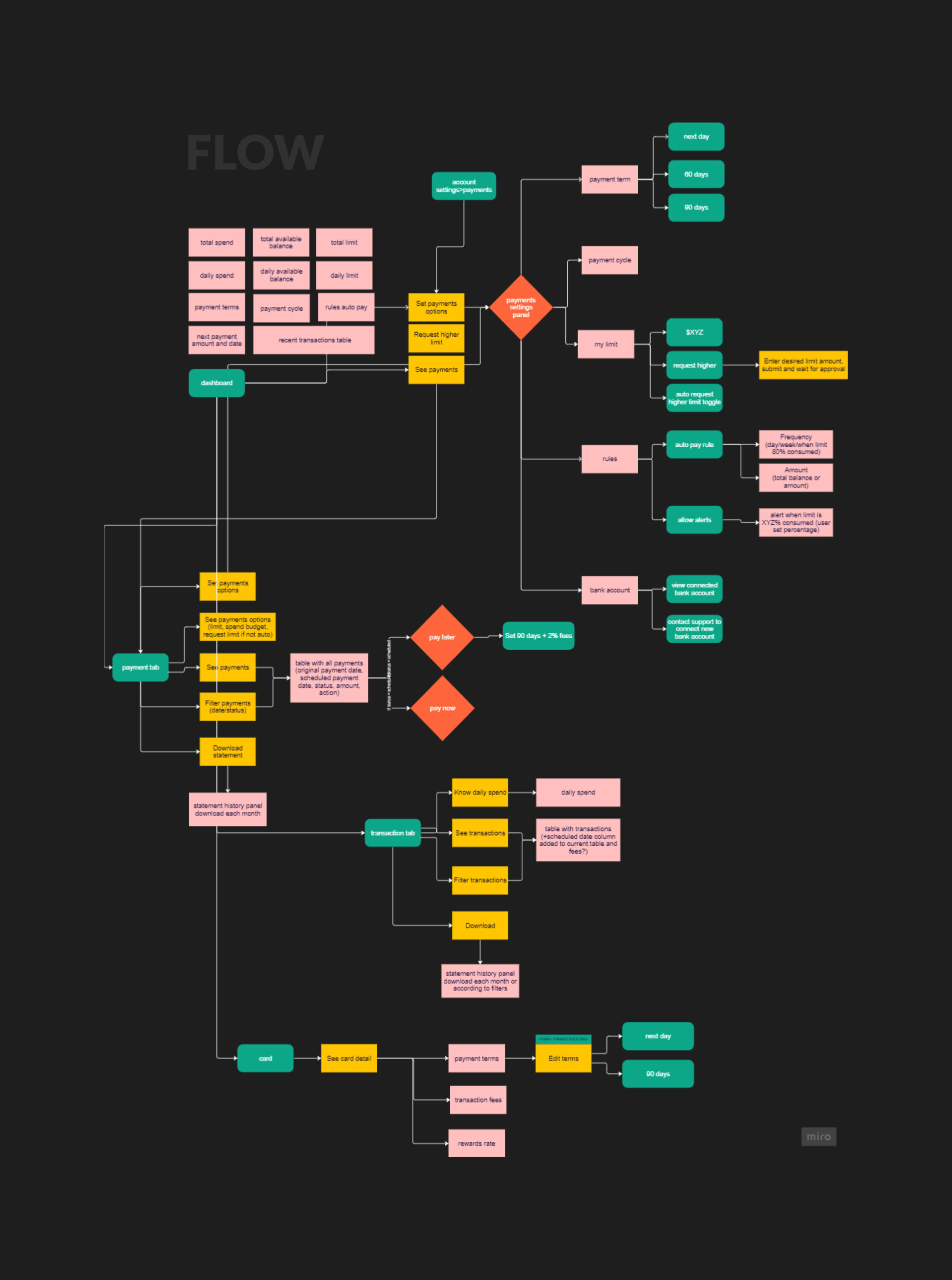
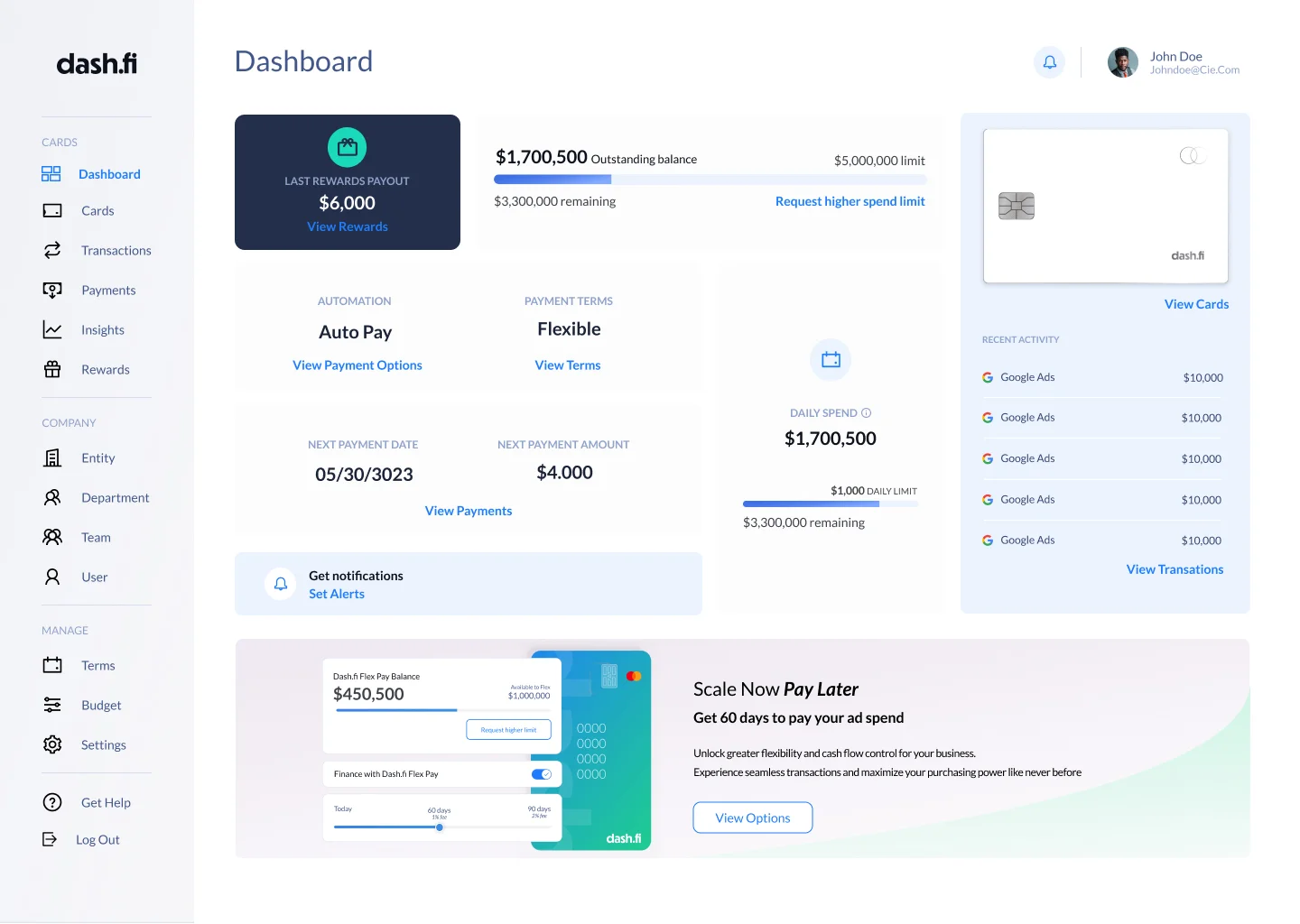
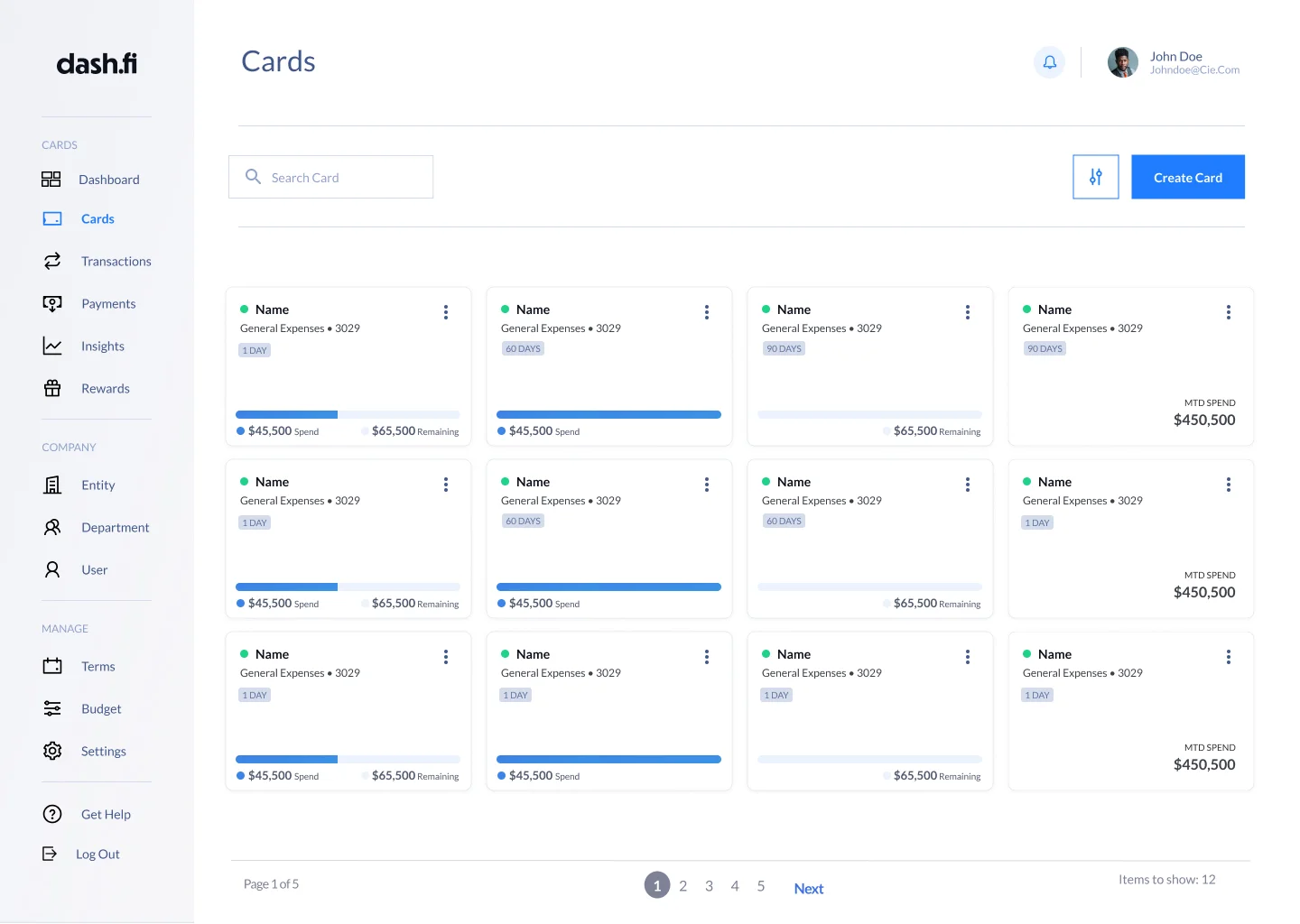
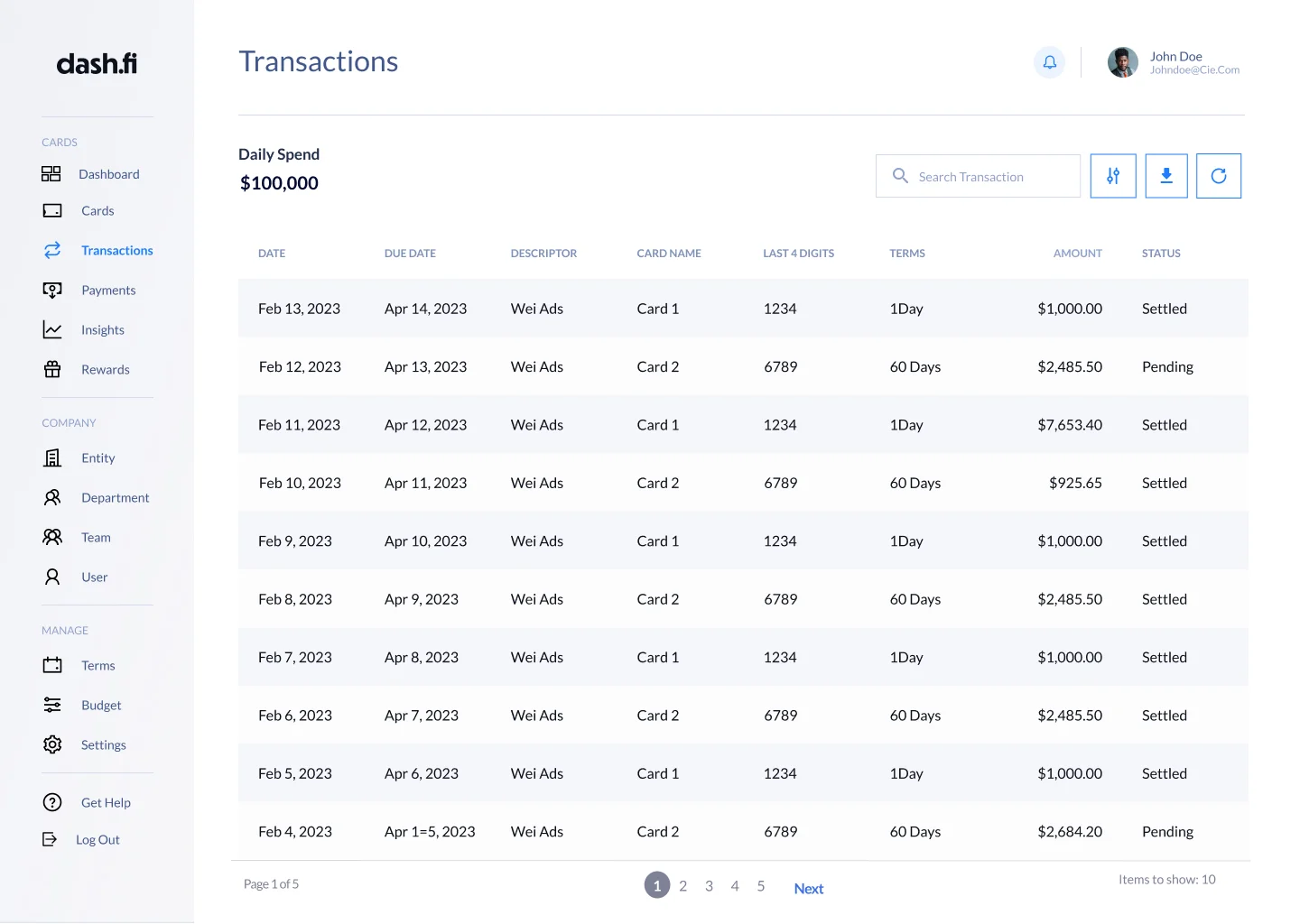
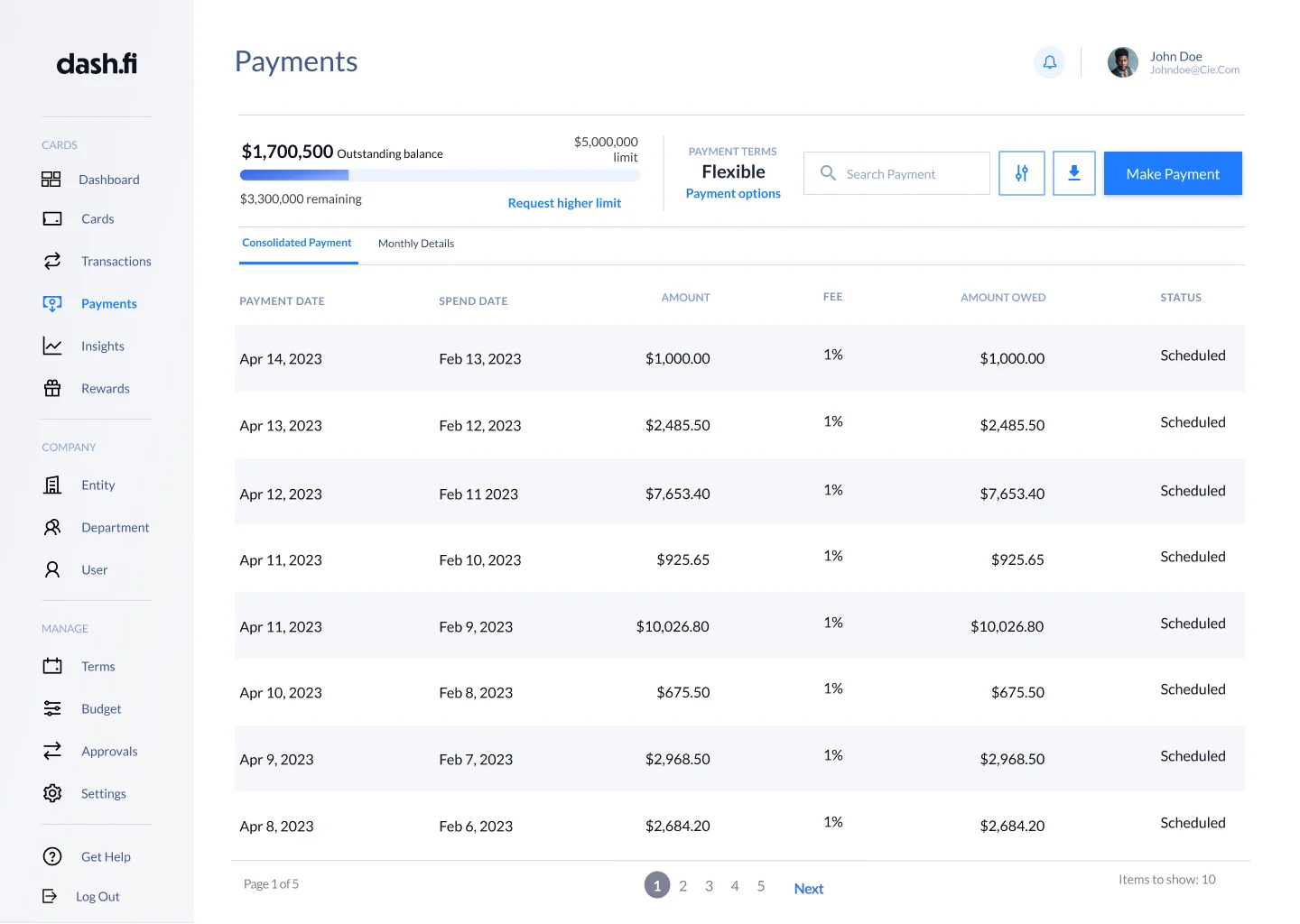
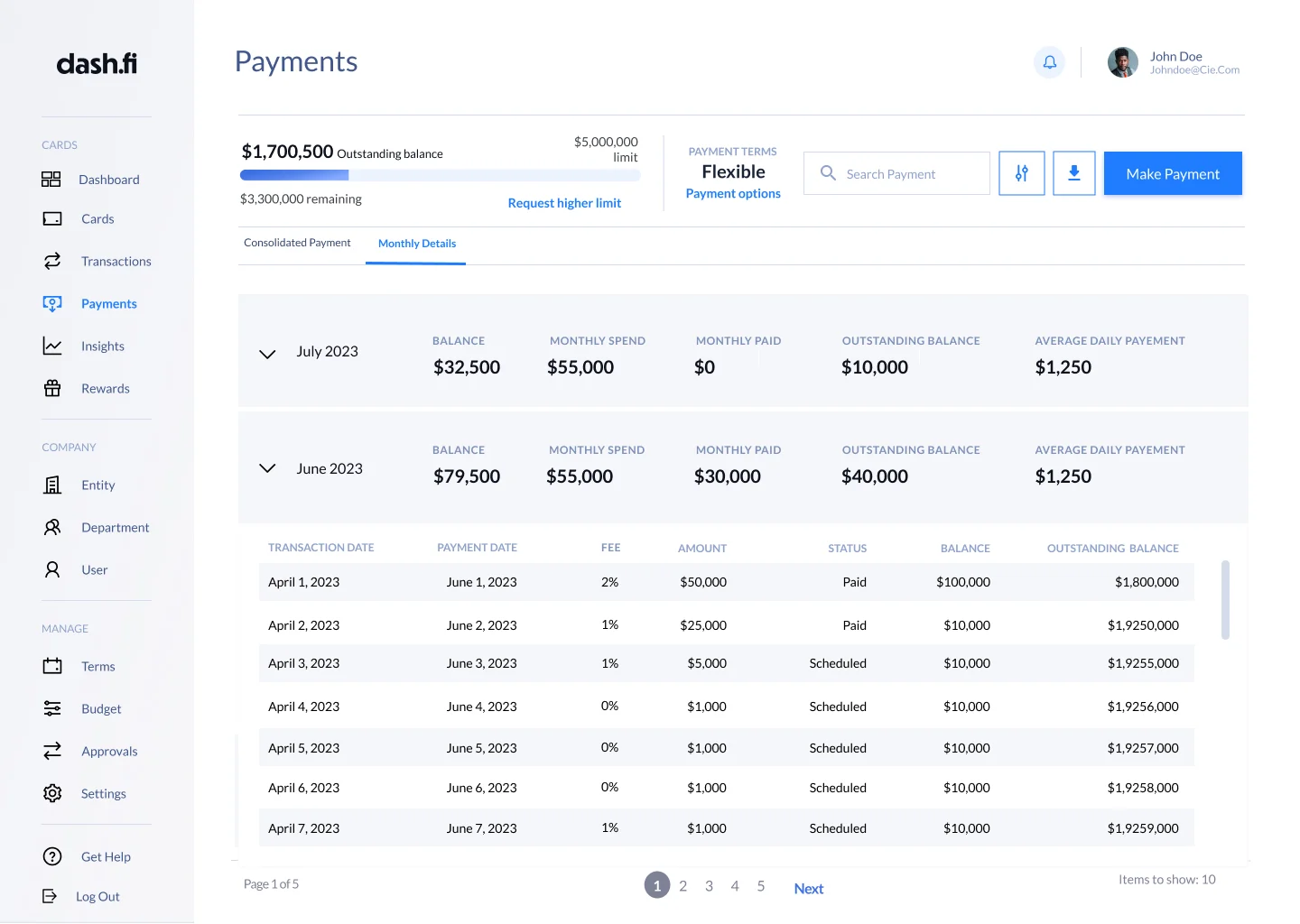
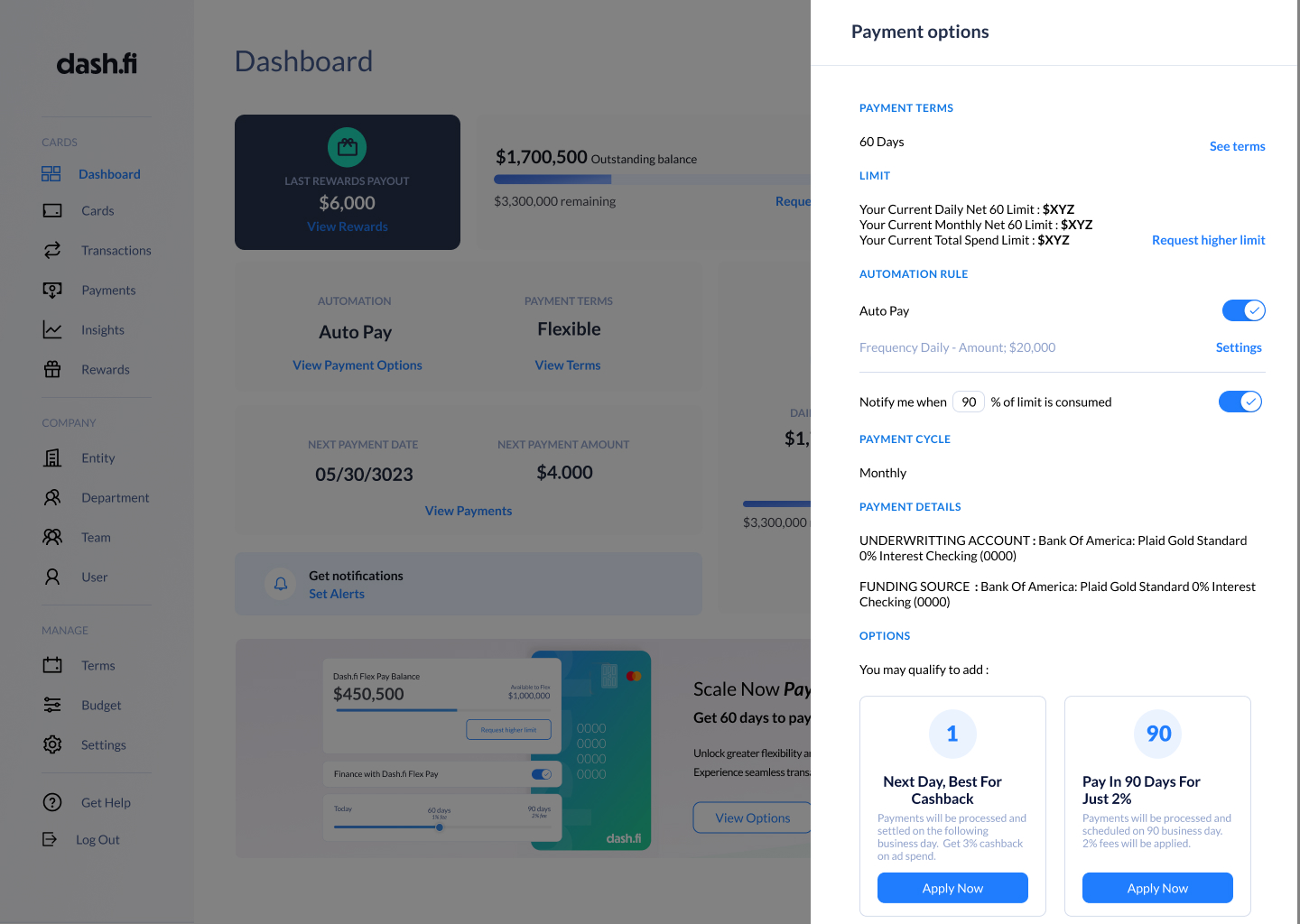
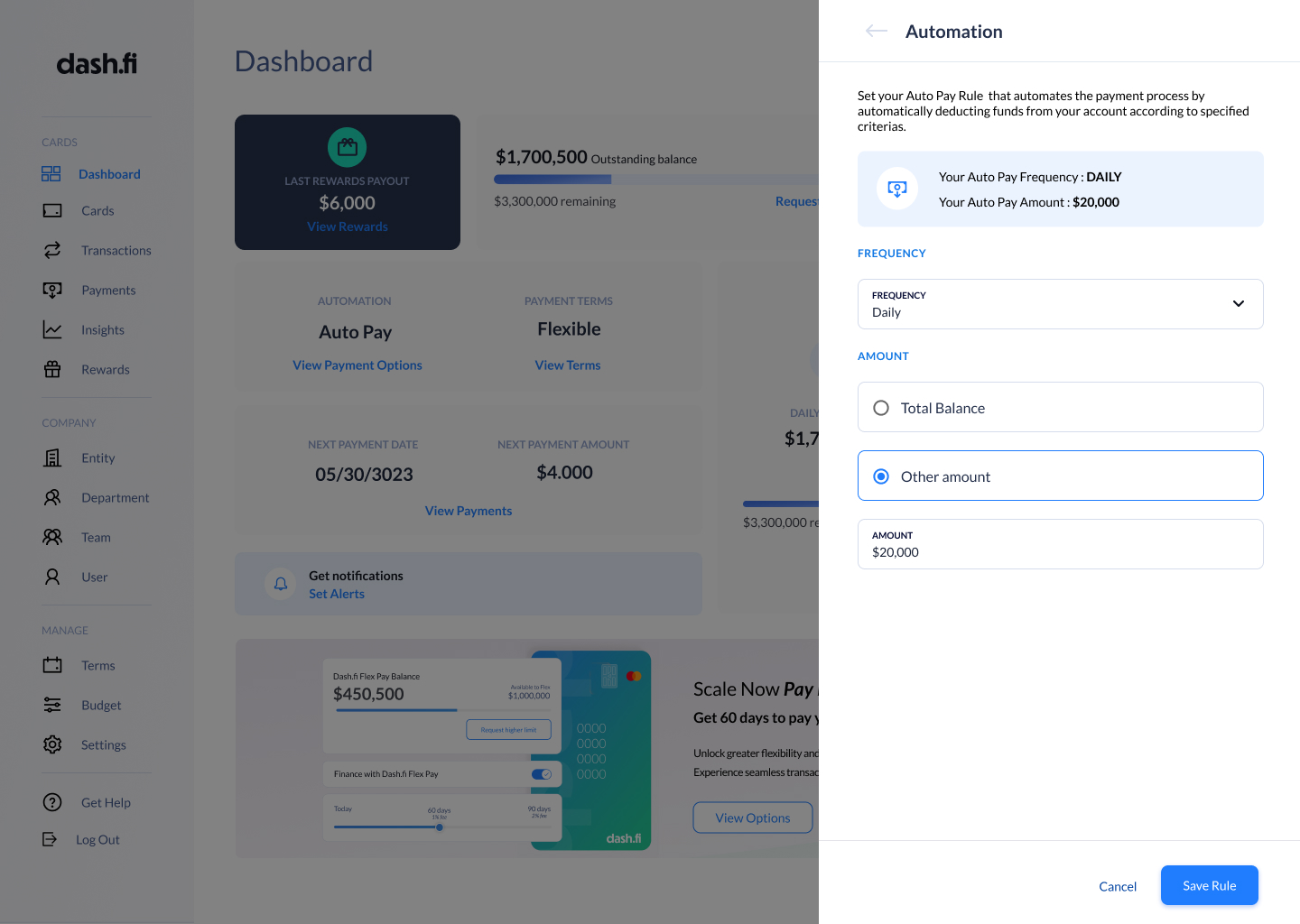
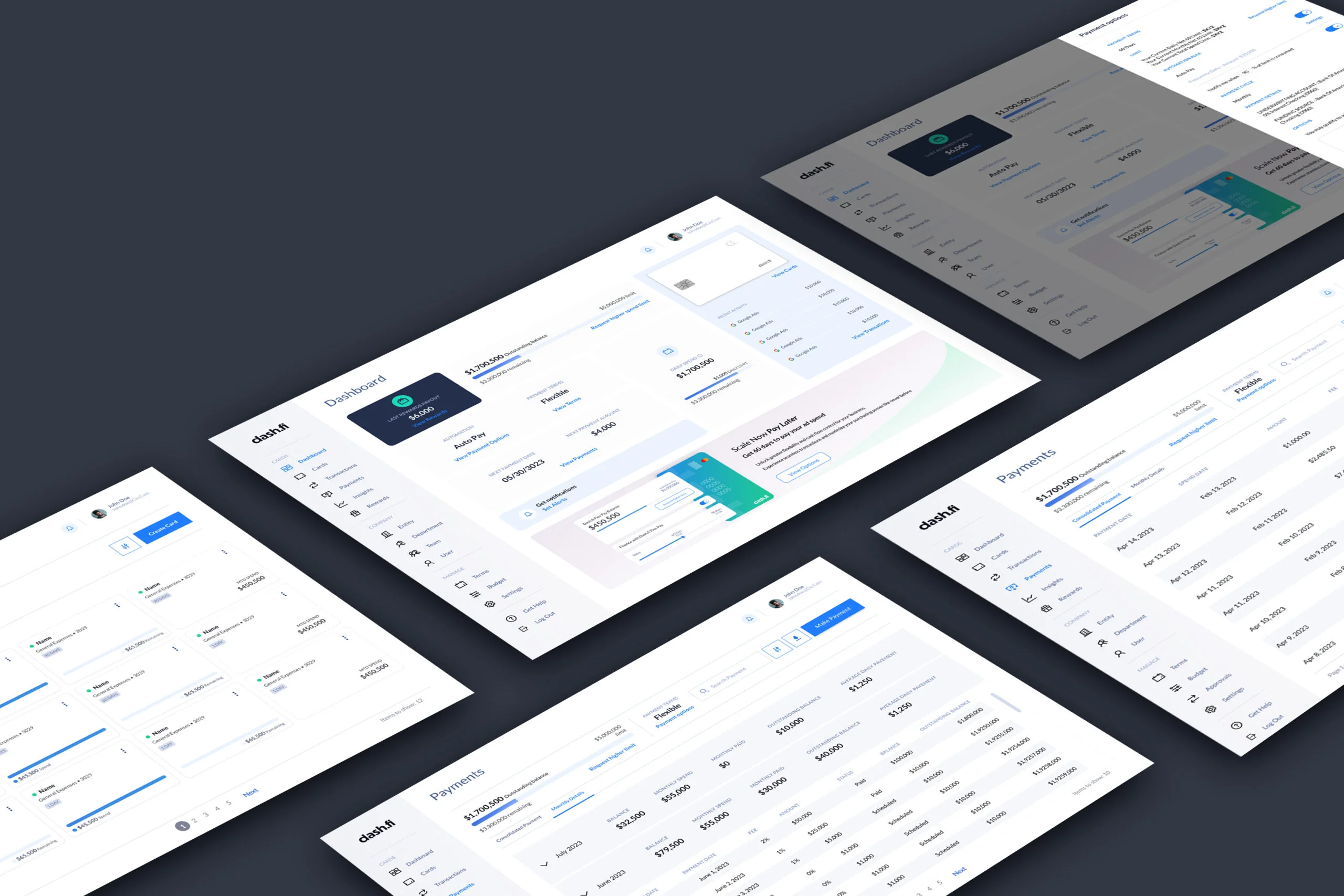
From a product design perspective, offering either multiple fixed-term products or a single flexible product posed trade-offs. Fixed-term options like 30, 60, or 90 days provided predictability but limited flexibility for variable cash flows. A flexible payment approach allowed users to tailor terms to business seasonality and cash flow needs but added complexity to the interface.To balance customization and simplicity, I designed a user flow where users could see their current payment terms on the dashboard and adjust terms at the account or individual card level. Users could track outstanding balances, upcoming payments, and available funds, while detailed transaction history ensured transparency and informed decision-making.
5. Prototyping & Pilot Preparation
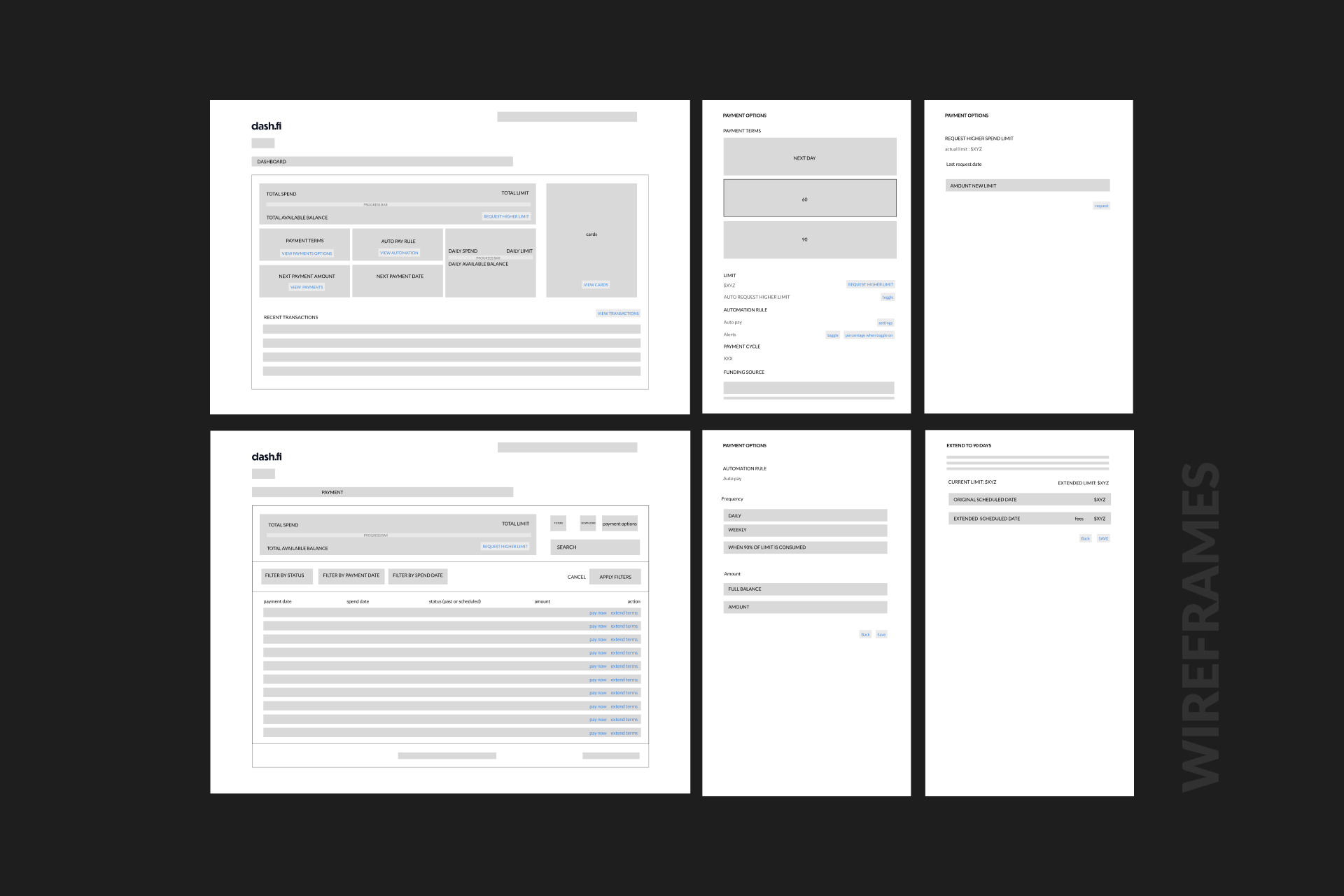
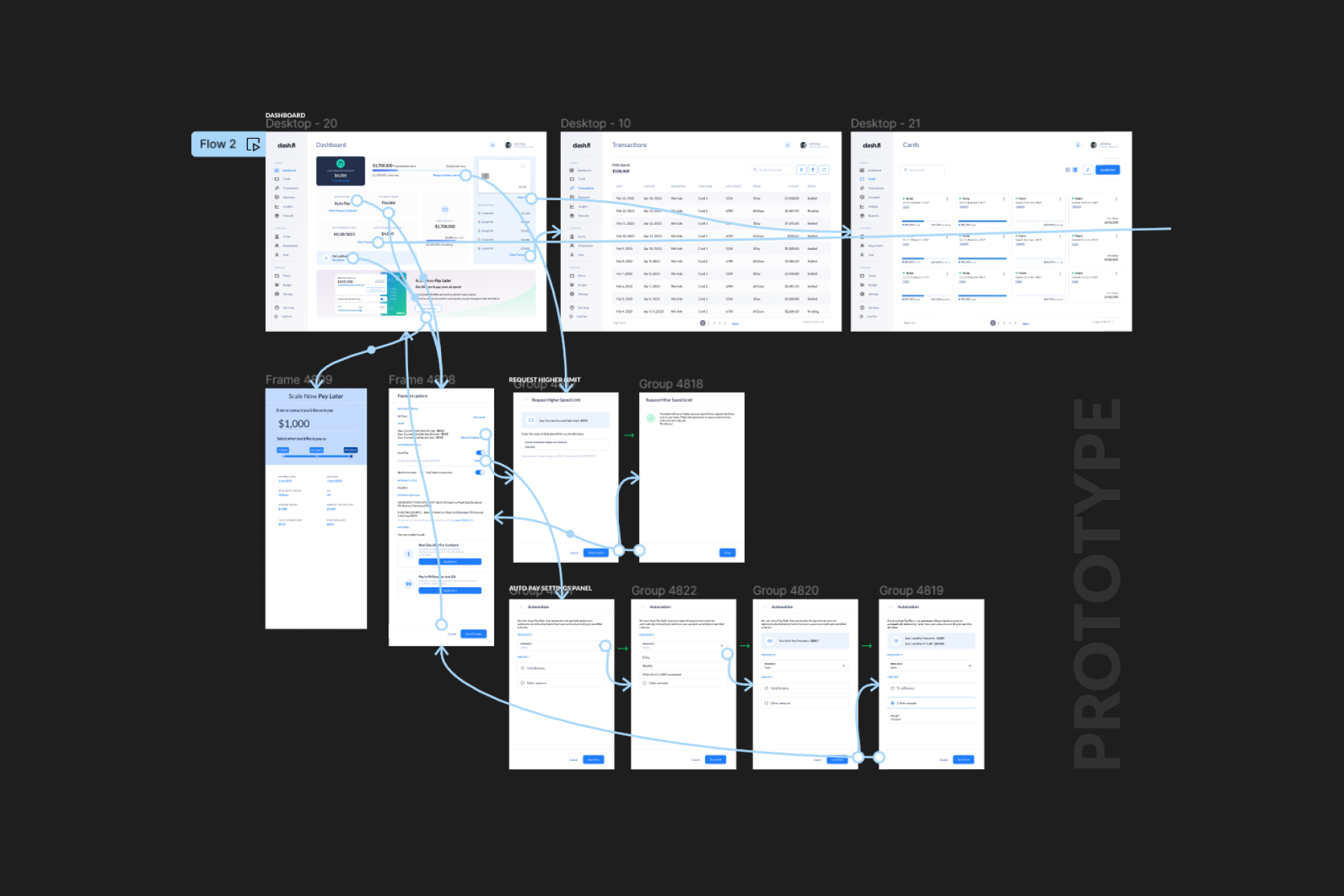
I began with wireframes testing two approaches: multiple fixed-term products versus a single flexible product. Usability testing with five users on Figma prototypes showed a clear preference for the flexible approach. After validation, I documented research findings in Confluence, created epics and user stories in Jira, and ran regular meetings and design reviews with product, engineering, finance, and executive teams to ensure alignment and feasibility.The pilot launch involved a select group of financially stable users who received designated credit to test the feature. This allowed us to collect early feedback, refine the dashboard, and validate the risk management measures before a broader rollout.